

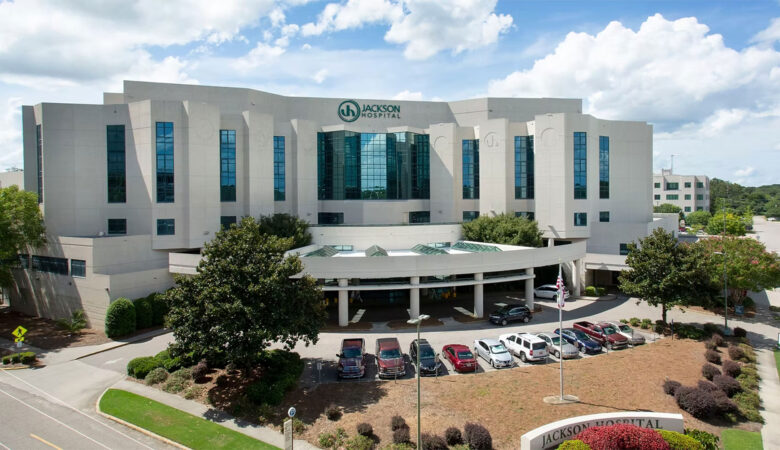
In recent public chattering surrounding the restructuring of Montgomery’s Jackson Hospital, a semi false narrative has taken root. Critics have quickly pointed fingers at hospital executives, labeling the facility’s Chapter 11 filing as proof of internal “mismanagement.” This perspective is not only legally and financially wrong, but it also fundamentally misdiagnoses the profound crises facing healthcare providers across the state of Alabama. To follow local voices criticizing hospital executives and financial backers while praising local politicians is mouthing from pure ignorance and political pandering.
To attribute a multi-million dollar shortfall strictly to executive decision-making ignores the punishing realities of an unexpanded Medicaid system, skyrocketing post-pandemic labor costs, and a deeply unequal reimbursement environment. Examining the objective financial data, legal filings, and the dynamics of Alabama healthcare reveals that Jackson Hospital is not a victim of internal failure, but rather a statistic of an unforgiving socioeconomic environment.

The Unequal Reimbursement Landscape for Jackson Hospital
The core of the argument against Jackson Hospital’s management rests on the claim that pointing to insurance reimbursement rates is “nonsense.” However, the hospital’s recent adversary proceedings in federal bankruptcy court reveal a mathematical disparity that no executive management team, no matter how skilled, could logistically overcome.
Jackson Hospital has historically operated at a competitive disadvantage regarding reimbursement rates from Blue Cross Blue Shield of Alabama (BCBSAL), which commands a dominant market share in the state. According to court records and independent financial assessments, Jackson Hospital has been reimbursed at rates significantly lower than competing regional institutions, such as Baptist Medical Center South, for providing the exact same medical services.
When a major commercial insurer pays one hospital nearly double what it pays another for identical inpatient and outpatient procedures, the disadvantaged hospital faces an immediate deficit. Commercial revenue is intended to subsidize the losses incurred by treating uninsured or underinsured patients. When that commercial revenue is artificially suppressed by rigid, non-negotiable contract structures, the safety-net model collapses. To label this a failure of internal management is like faulting the ship for capsizing after loading it unevenly.
Non-Medicaid Expansion and the Political Handcuffs
A hospital cannot control the legislative environment of the state in which it operates. Alabama remains one of a dwindling number of states that has consistently refused to expand Medicaid under the Affordable Care Act. While we agree this act is responsible for the skyrocketing cost in healthcare, other conservative states have taken advantage of Medicaid Expansion. The direct consequence of this policy falls squarely on institutions like Jackson Hospital, which is legally and morally bound to provide emergency care regardless of a patient’s ability to pay.
In 2023 alone, Jackson Hospital absorbed more than $45 million in gross charges related to the care of uninsured individuals.
“Like many hospitals across the country, Jackson has experienced significant financial pressures due to increased labor costs, stagnant reimbursement rates, a challenging payor mix, and fallout from COVID-19. In addition, without Medicaid expansion in Alabama, the Hospital suffers significant financial losses due to its care for uninsured individuals.”
— Official Statement from Jackson Hospital Restructuring
For over a decade, Jackson’s leadership utilized its own investment reserves—depleting over $60 million in available capital by mid-2021—to keep the doors open and protect the health of residents across 16 central Alabama counties. Exhausting private reserves to fill a public policy void is a sign of civic commitment, not executive negligence.
Debunking the Political Cynicism Narrative for Jackson Hospital
Local critics have also advanced highly cynical political theories, suggesting that the hospital remains operational only because of out-of-state political optics involving Jackson Investment Group (JIG) and its leadership. This claim demonstrates a fundamental misunderstanding of corporate restructuring and bankruptcy law.
When Jackson Hospital filed for Chapter 11 protection, it required immediate liquidity to ensure that patient care, nurse payroll, and medical supplies remained uninterrupted. Capital markets do not extend credit to distressed safety-net hospitals out of political goodwill. It was Jackson Investment Group that stepped forward to provide the critical Debtor-in-Possession (DIP) financing, which was subsequently amended and expanded to $35 million under federal court oversight.
This DIP financing carries rigid, court-approved terms and substantial financial risk for the lender. JIG’s capital is the literal mechanism keeping the lights on and the emergency room operational. Framing this multi-million dollar financial lifeline as a mere public relations stunt diminishes a vital capital injection that has preserved hundreds of local healthcare jobs and saved lives in the River Region. For uninformed and political sycophants to casually elevate local political figures as the “Saviors” of Jackson is asinine at best!
Municipal Responsibility is Standard Practice
The argument that local government involvement is an unnecessary bailout or the result of backroom political dealing ignores how public health infrastructure is financed across the United States. In Alabama, counties like Jefferson routinely allocate significant local tax revenues and public funds to support community health systems and safety-net care.
The $80 million restructuring plan—supported by a combination of state capital grants and city/county allocations—is not a specialized favor to Jackson Hospital’s executive board. It is an acknowledgment by state and local leaders, including Mayor Steven Reed, Representative Shomari Figures, and the Montgomery County Commission, that preserving a 344-bed acute care facility is vastly less expensive than dealing with the catastrophic economic, political, and humanitarian fallout of its closure. They know their political futures and legacies are joined at the hip with the healthcare of the community. Let Jackson close and find out!
If Jackson Hospital were to close, the remaining regional healthcare network would instantly be overwhelmed, leading to dangerously long emergency room wait times, an extremely limited amount of available beds, another drop in local property values, and an inability to attract new business to the River Region. The collaborative funding model currently being debated is a necessary exercise in public-private economic preservation.
Reframing the Narrative
Jackson Hospital’s leadership took the necessary, responsible step of entering a court-supervised Chapter 11 restructuring. This process was designed precisely to give viable institutions the breathing room required to resolve legacy debt, re-negotiate unsustainable contract terms, and build a stable platform for the future.
To reduce this complex socioeconomic equation to “bad executives” is lazy analysis at best. It lets a flawed, unexpanded state healthcare system off the hook, and it ignores the documented reimbursement disparities that actively penalize community-focused hospitals. Jackson Hospital is fighting to survive in an environment that has already forced dozens of rural and community hospitals across the South to close permanently. The fact that Jackson remains open, operational, and actively charting a path toward stabilization is a testament to resilience, strategic pivoting, and the critical support of leaders who understand the math behind the medicine.



Leave a Reply