

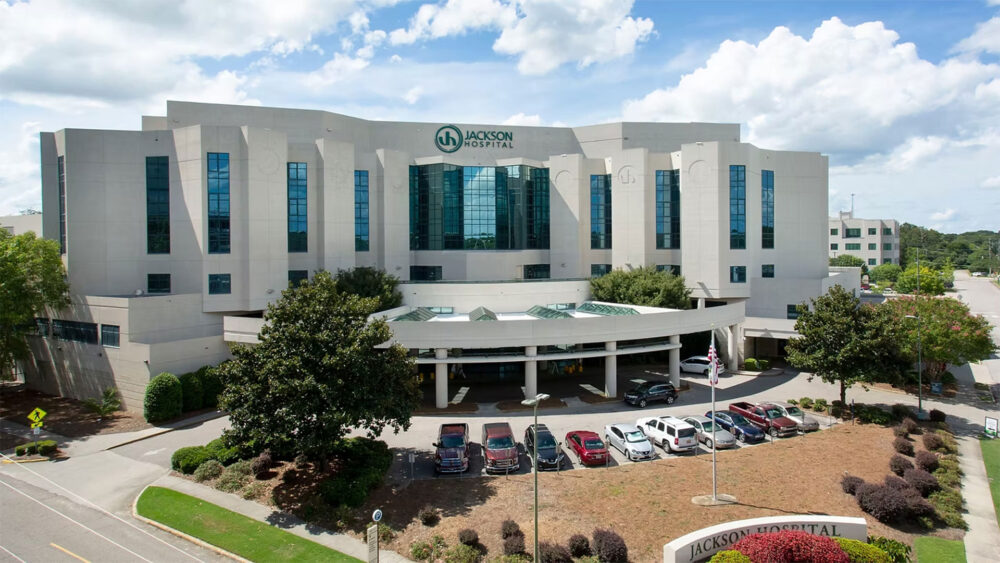
The dispute between Jackson Hospital and Blue Cross Blue Shield (BCBS) of Alabama has reached a high-stakes bottleneck. On June 18, 2026, U.S. Bankruptcy Judge Christopher L. Hawkins denied Jackson’s emergency request to force BCBS of Alabama to immediately increase its reimbursement rates to match those paid to nearby Baptist Medical Center South. The court ruled that unilaterally rewriting a commercial contract via a preliminary injunction is “antithetical to the public interest.” The judge also highlighted that roughly $80 million in state and government grants remain earmarked for Jackson once it successfully exits Chapter 11 bankruptcy. It is unfathomable for BCBS of Alabama not to initiate a reimbursement rate at least comparable to Baptist.
This legal setback leaves Jackson Hospital at a dangerous crossroads. The hospital board’s hard deadline of June 25, 2026, is rapidly approaching. Without an immediate operational compromise or rate adjustment, leadership warns they will have no choice but to initiate an orderly wind-down to close the facility. While BCBS maintains that Jackson’s patient mix lacks the clinical complexity of larger tertiary centers, the human reality for Central Alabama is clear: the closure of this 1,800-employee pillar would trigger a catastrophic healthcare emergency across the entire River Region.
The Heartbeat of the River Region: Why We Cannot Allow Jackson Hospital to Close
For decades, the sprawling campus of Jackson Hospital has stood as a literal and figurative landmark of stability in Montgomery, Alabama. It is a place where generations of River Region families have celebrated the first breaths of newborns, found comfort in moments of sudden medical trauma, and leaned on a dedicated network of local clinicians during their most vulnerable hours.
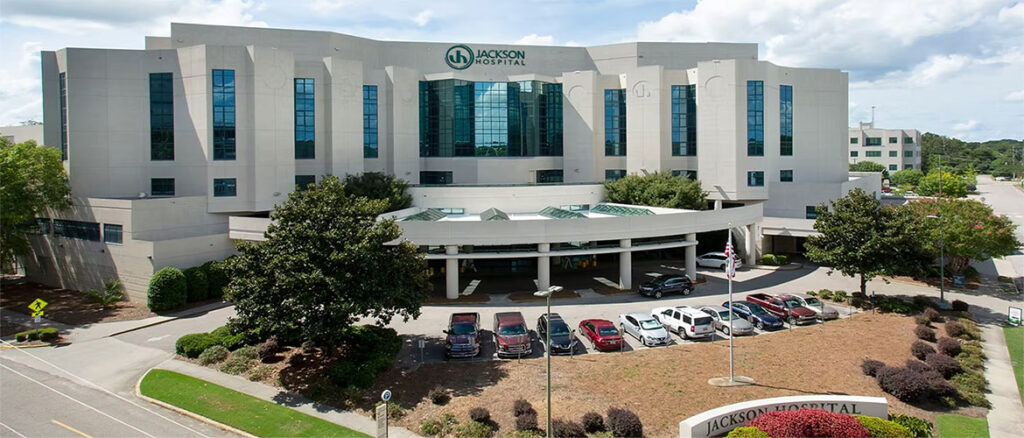
As seen in the architectural landscape of the campus above, Jackson is not merely a collection of concrete clinical wings and treatment rooms; it is an irreplaceable piece of our community’s infrastructure. Today, that entire foundation is threatened by a devastating financial standoff. With a critical June 25 deadline looming, the potential closure of Jackson Hospital is no longer a distant worst-case scenario—it is an imminent crisis that would rip a hole through the economic, social, and physical health of Central Alabama.
The Mathematics of Suffocation
To understand how a historic institution found itself on the brink of a forced shutdown, one must look closely at the unique mechanics of Alabama’s healthcare market. According to recent data from the American Medical Association, Alabama possesses the least competitive commercial health insurance market in the entire United States, with a single dominant insurer commanding an overwhelming market share. In an environment structured this way, a hospital cannot simply walk away from an inadequate contract; it must accept the rates offered or face operational starvation.
Jackson Hospital’s leadership has revealed a stark, unsustainable disparity: the dominant insurer reimburses Jackson approximately 34 percent less for inpatient care and 30 percent less for outpatient services compared to other local peer facilities. When an institution is forced to provide the exact same surgeries, the exact same emergency care, and utilize the exact same expensive medical technology at a 30 percent discount relative to its neighbors, financial insolvency becomes a matter of simple arithmetic rather than simple mismanagement.
Compounding this structural deficit is Jackson’s role as a vital safety-net hospital. In a single recent fiscal year, Jackson absorbed more than $45 million in completely uncompensated care for uninsured and underinsured residents. A facility cannot continuously weather the twin pressures of discounted commercial reimbursements and a massive uncompensated public service load without breaking. When a dominant insurer underpays an institution under these specific conditions, the hospital does not just bleed cash—it suffocates.
The Catastrophic Ripple Effect
If Jackson Hospital is permitted to close its doors, the immediate fallout will resemble a stone thrown into a fragile pane of glass. The most immediate shockwave will shatter the local economy. As one of Montgomery’s largest employers, Jackson supports roughly 1,800 specialized jobs, including highly trained nurses, technicians, physicians, and administrative staff. Displacing 1,800 workers simultaneously will severely damage local household spending, disrupt small businesses that rely on the hospital ecosystem, and accelerate a drain of premier medical talent leaving the state entirely.
However, the medical consequences are far more terrifying than the economic ones. The River Region—encompassing Montgomery, Autauga, Elmore, Lowndes, and Macon counties—operates as a deeply interconnected healthcare ecosystem. Our local emergency rooms and inpatient wards are already strained to near-capacity. If Jackson’s beds are suddenly removed from the region’s inventory, thousands of emergency room arrivals, cardiac interventions, and acute care placements will be instantly diverted to surrounding facilities like Baptist Medical Center South.
The result will be systemic gridlock. Wait times in local emergency rooms, which are already a source of frustration for residents, will skyrocket exponentially. Ambulances will find themselves backed up in hospital bays, unable to transfer patients to full emergency departments, which in turn will delay response times for the next 911 call in our neighborhoods. In critical medical events like a severe stroke, an acute myocardial infarction, or a major traumatic injury, minutes determine the boundary between survival, permanent disability, and death. Forcing patients across the River Region to compete for a drastically reduced pool of emergency beds is a direct threat to public safety.
A Bridge to Stability Already Exists
The recent federal bankruptcy court ruling clarified that a judge cannot legally step in to rewrite private insurance contracts, noting that doing so by judicial decree is antithetical to standard public interest. However, the ruling also highlighted a crucial piece of hope that the community must seize upon: a lifeline has already been built. There is approximately $80 million in combined state and government grant funding waiting to be unlocked the moment Jackson Hospital successfully exits its Chapter 11 reorganization framework.
This massive public commitment proves that our state and local leaders fully recognize that Jackson is too vital to fail. The money to stabilize this institution is sitting on the horizon. It is deeply reckless to allow a critical safety-net hospital to sink inches away from a structural lifeline simply because two corporate entities cannot find a temporary bridge to get there.
What the River Region needs right now is not further finger-pointing in the press or rigid adherence to standard legal formalities; it requires an immediate, transitional compromise. BCBS of Alabama has expressed a public commitment to keeping the facility open and protecting its two million members statewide. Now is the time to turn that rhetorical commitment into tangible action. A temporary rate adjustment, a specialized bridge funding mechanism, or an expedited restructuring agreement must be carved out before the June 25th deadline arrives.
Keeping the Doors Open
Jackson Hospital belongs to the people of Montgomery and the surrounding communities who have relied on its care for generations. Its value cannot be measured solely on a corporate balance sheet or evaluated through the cold lens of a legal injunction. It is measured in the lives saved in its cath labs, the stroke recoveries managed in its intensive care units, and the peace of mind it provides to families across Central Alabama. River Region Living recognizes the professionalism of it’s staff and the quality care it provides. We cannot imagine the unnecessary position that BCBS has placed not only the hospital but the community filled with the families it insures due to seemingly unfair compensation disparities.
Allowing Jackson to close would be an administrative and moral failure that our region might never fully recover from. For the sake of our economy, our families, and our collective safety, all parties must return to the negotiating table with an absolute refusal to walk away until a resolution is signed. The River Region relies on Jackson Hospital, and right now, Jackson Hospital needs the unyielding support of the region it has served so faithfully.




Leave a Reply